
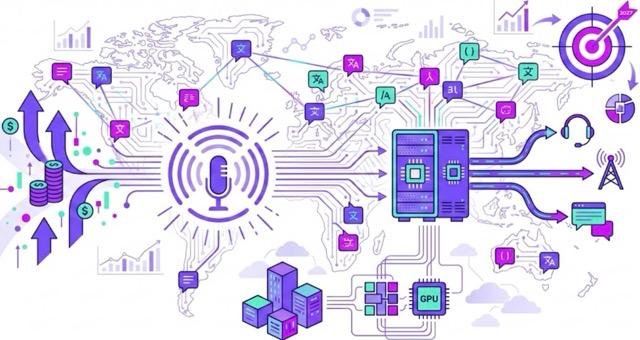
Bengaluru-based Ringg AI has secured $5.5M in Series A funding led by Arkam Ventures to transition from API dependency to proprietary infrastructure. While early voice agents relied on “wrapping” LLMs like GPT-4, Ringg is using this capital to build internal GPU clusters and train native models for its 18-language stack.
The Situation
The voice AI market is bifurcating into two camps: low-margin wrappers and full-stack infrastructure players.
- Traction: Ringg currently processes 1.5 million monthly conversations, with 77% fully automated (zero human intervention).
- The Cap Table: The round includes participation from heavyweights like Kunal Shah (CRED), White Venture Capital, and the Groww Founder Fund, signaling strong product-market fit in high-volume sectors like fintech and logistics.
- The Goal: Scale from 1.5M to 100M monthly interactions by 2027.
Why It Matters
1. The Unit Economics Trap
Most voice agents fail because API costs (calling OpenAI/Anthropic) eat the margin. By moving to proprietary models, Ringg aims to slash the cost-per-minute, a survival requirement in price-sensitive markets like India where “human” labor sets the price floor.
2. Second-Order Effect: Data Residency
Enterprise clients like CRED and Shell demand strict data compliance that public LLM APIs often fail to satisfy. Ringg’s shift to on-premise and proprietary deployments isn’t just about cost—it’s about unlocking the regulated BFSI sector.
3. The Consolidation Signal
With Bolna raising $6.3M (Seed) and Smallest.ai raising $8M (Seed) recently, capital is flooding the sector. However, the shift to Series A signals the “science project” phase is over; only players who can demonstrate operational leverage (reducing call center opex by ~63%) will graduate.
Founder Action
- Audit Your Dependency: If your AI product relies 100% on external APIs, your margins are capped. Map a path to small, specialized proprietary models (SLMs) for high-volume tasks.
- Verticalize Fast: Ringg won by dominating specific workflows (collections, lead qualification) for specific verticals (Fintech/Logistics) rather than building a “general” voice bot.
- Watch the Metric: The North Star is no longer “accuracy” but “end-to-end automation rate” (Ringg is at 77%). If you aren’t removing humans completely, you aren’t solving the labor shortage.
