
The Situation
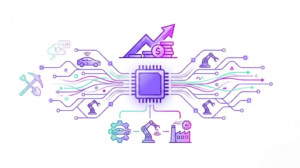
Bengaluru-based Sensesemi Technologies closed a ₹25 Cr ($2.75M) seed round led by Piper Serica to tape out its first commercial “SenseSoC” chips in Q1 2026. The capital creates a runway for validating the company’s proprietary architecture, which fuses AI inference, wireless mesh connectivity, and analog signal processing into a single ultra-low-power die. Unlike general-purpose processors, Sensesemi targets the hardware-constrained “Internet of Medical Things” (IoMT) and industrial IoT markets, where battery life dictates viability. The firm has secured backing from India’s Design Linked Incentive (DLI) scheme, confirming government intent to subsidize domestic IP creation over mere assembly.
Why It Matters
The “Dumb Node” Opportunity:
Of the 30 billion connected devices projected by 2030, roughly 20 billion currently lack onboard intelligence due to power constraints. Sensesemi attacks this “dumb sensor” gap by processing data at the source (the edge) rather than beaming it to the cloud, slashing latency and bandwidth costs. This creates a defensible moat against high-performance, high-power incumbents like Nvidia, whose silicon is overkill for a pacemaker or pipeline monitor.
Supply Chain Sovereignty:
This deal marks a structural shift in India’s semiconductor ambitions—from back-office verification to front-end architectural ownership. By designing locally and partnering with domestic OSATs (like Kaynes Technology) for packaging, Sensesemi reduces reliance on foreign supply chains for critical healthcare and industrial infrastructure. The successful deployment of DLI funds here proves the policy is operational, not just theoretical.
Founder Action
Audit Your Edge BoM:
If your hardware stack currently uses separate components for MCU, AI acceleration, and connectivity, you are likely overpaying for power and board space. track integrated SoCs like SenseSoC to consolidate three chips into one.
Monitor Domestic Deep Tech:
Investors should note the signal quality: Piper Serica (a public markets veteran) leading a seed round implies high conviction in the exit path for Indian deep tech. Founders in regulated verticals (medtech/defense) should prioritize domestic silicon partners now to lock in future supply chain compliance incentives.