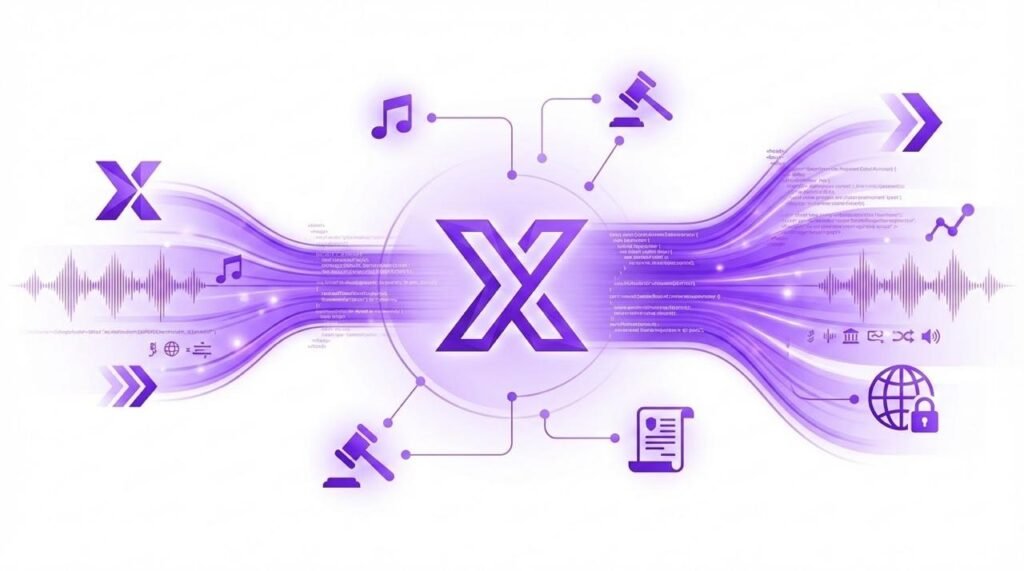
X Corp’s antitrust lawsuit against 18 music publishers and the National Music Publishers’ Association (NMPA) flips the script on copyright liability, positioning collective licensing as an illegal monopoly—potentially lowering platform overhead while risking total content blackout.
The Situation
On January 9, 2026, X Corp filed a federal antitrust lawsuit in Northern Texas against the NMPA and major publishers including Sony, Universal, and Warner Chappell.
The complaint alleges that these entities, which control approximately 90% of the U.S. musical composition market, conspired to block individual licensing negotiations and force X into “inflated” industry-wide blanket deals. This move follows the collapse of settlement talks in November 2025, where both parties reportedly made “substantial progress” before negotiations stalled.
The data underscores a massive operational strain: X claims publishers “weaponized” the DMCA process, issuing over 200,000 takedown notices in a single year to coerce compliance. These enforcement actions resulted in the suspension of 50,000 users and a subsequent loss of ad revenue, which X is now seeking to recoup through unspecified damages.
Why It Matters
This is not a defensive legal posture; it is a strategic attempt to dismantle the collective bargaining power of the “Big Three” publishers. The second-order effects are binary: either X successfully forces individual (and cheaper) licensing rates, or it triggers a retaliatory mass-removal of content that could degrade user engagement by 15–20% in the “Short Form Video” segment.
For stakeholders, this signals a high-stakes test of the “Safe Harbor” protections under the DMCA. If the court sides with X, it creates a precedent for emerging platforms to bypass trade associations (NMPA) and demand direct-to-publisher pricing. Conversely, the music industry maintains X is the only major social platform, compared to Meta, TikTok, and YouTube, that refuses to pay for its content. A loss for X would likely result in a judgment exceeding the $250M damages sought in the publishers’ original 2023 infringement case.
Founder Action
Founders building in the social, AI, or content-curation space must audit their licensing exposure immediately. If your platform relies on third-party IP, do not assume trade association rates are the floor; however, do not assume Safe Harbor is a permanent shield against coordinated litigation.
- Audit: Review DMCA compliance protocols to ensure they can handle automated, high-volume takedown surges without crippling user retention.
- Build: Develop proprietary or royalty-free audio libraries to reduce platform dependency on major labels.
- Ignore: The “fair use” argument as a primary business model. The current legal climate suggests that high-volume platforms will eventually be forced to choose between a license or a lawsuit.